Torque Control

LSFRC event: Brian Stableford–Le Roman Scientifique

sabBrian Stableford will be speaking about the evolution of an important early science fiction form, the French roman scientifique, supported by the London Science Fiction Research Community (LSFRC).

Monday, February 12th, from 6:30 pm until 8pm, at The Keynes Library, 43 Gordon Square, London.

Brian’s lecture will map its way according to several signposts: Beginning with the origins of the roman scientifique in the illicit “philosophical fiction” of the eighteenth century, he will also discuss the after-effects of the French Revolution on utopian thought and the future impact of technological advancement on society; the development of “travelogue fiction” before and after Jules Verne; the preoccupation with future wars after 1870; the development of “scientific marvel fiction”; and the particular influence of WWI on French writers and their speculative fiction.

In addition to critical studies of science fiction, Stableford has authored more than 70 novels and translated even more, most from French to English. His work on the development of the roman scientifique in the long nineteenth century has vital significance for understanding later manifestations of science fiction in France, the Anglo-American setting, and around the globe. We hope you can join us for what is sure to be a fascinating evening with one of the most influential and prolific figures in science fiction.

#SciFiSessions: M John Harrison & Gary Budden

A SciFi Sessions conversation, hosted by Glyn Morgan at Gower Street Waterstones (London).  Click here for details of future events,  #SciFiSessions return in January 2018 with a special three author event showcasing British fantasy talent. 

 Weird Fiction for Weird Times by Andrew Wallace
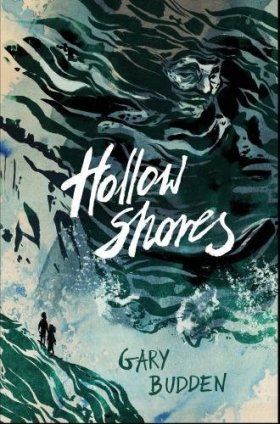
HSMike John Harrison, a veteran of the 60s New Wave SF scene, and Gary Budden, an award-nominated short story writer whose first collection Hollow Shores (Dead Ink Press) is out now, discussed how weird fiction is indispensable for processing contemporary political realities.

Mike recounts JG Ballard at a party held by seminal SF magazine New Worlds predicting how the world would become ever more fantastical and psychopathic. At the time, everyone thought Ballard was overstating the case; now, Mike says, his own ferocious, mythic engagement with the culture feels redundant. Indeed, far from our culture inhabiting an exciting new realm of limitless possibility, some reality would be rather welcome. Gary says that the current fractured, nonsensical nature of the world means that weird fiction is resurgent; that the genre is merely reporting on the psychological state of our culture. Indeed, a contemporary writer of ‘realist’ fiction would now need to accommodate the weird simply to reflect what is going on.

Both writers engage with landscape in ways that challenge its conventional certainties. For example, Gary read a short piece about the actor Peter Cushing, who lived in Whitstable. In the story, the actor is referred to via his greatest roles, like ‘the Vampire Hunter’, as he wanders around the seaside town accompanied by his best friend, ‘the Vampire’ (presumably Christopher Lee). They meditate on their great fictional battles, surrounded by the everyday bustle of modern life, and meditate on an uncertain future. This blending of myth and reality has personal note: Gary grew up in Whitstable and the area has a strong folkloric identity. He writes weird fiction because that is the only genre that reflects his understanding of this familiar landscape. One way to reconcile the desire for his home space to be closer to its mythical – but not idealised – identity, and further from its proximity to prime UKIP country, is to use techniques of psychogeography, or as Gary calls it ‘landscape punk’. The Hollow Shores are a real place; the name is drawn from history like some treasure previously submerged that has slowly come to light.

However, the stratification of the English landscape brings political peril. The online Hookland project, which explores a fictional English county using folklore, spent the day of the discussion fighting off an English neo-Nazi who wanted to use the site to justify national/racial purity. Mike says that writers should make their position on landscape politics clear, and maintain awareness that landscape itself has no sentimentality at all. It has its own language, often weird, that should be used with full awareness to avoid the descent into easy nationalism.

Gary is interested in the fringe elements of our island; how its marginal landscapes change over time in a way that seems arbitrary, even absurd. For example, Whitstable would not even have been on the coast when the area now known as Doggerland linked Kent to mainland Europe 10,000 years ago. Doggerland was flooded at the end of the last Ice Age, a prospect we face on the attenuated landmasses of our own time. But for a few degrees’ variation in temperature, the Britain we know would not have existed and neither, in our current form, would we. There is a sense of possibility, only just missed, that folkloric weird fiction reflects so well.

harrisonCreation of a fictional Doggerland-like continent lay behind one of Mike’s projects for New Worlds, in which elements of a series of seemingly unconnected narratives would reveal that a new continent had appeared. Although the book never came to fruition, the stories evolved and formed part of his new collection, You Should Come With Me Now, published by Comma Press. He read a story from the collection called Psychoarcheology. Ostensibly a satire about the unending discovery of royal remains beneath car parks, it also looked at how the royals themselves are as trapped by their DNA into a life of rule they may not want, as their bodies are trapped beneath tarmac. This layering is an example of one of the different narrative techniques Mike uses to draw the reader through stories that do not have conventional narrative plots. Another is ‘reframing’, in which characters are moved through different landscapes as if on a journey, placing them in unfamiliar locations to accentuate the essential quality of strangeness. The weird, then, is as much to do with the way the story is told as its subject matter.
BSFA Awards – Stage 2

The BSFA Awards are awarded each year to the best Novel, Short fiction, Non-Fiction and Artwork.

The process for choosing the 2017 award winners is underway! We are currently in the second (shortlisting) stage. To vote in stage 2, visit this link: https://tinyurl.com/BSFA2017shortlisting

Who can shortlist?

 You may vote to shortlist a work if YOU:

AND

  • Send or give your shortlisting votes to the Awards Administrator to arrive by the 31st January of each year. See here for further details.

The last year’s winners were:

Cover art by Sarah Anne Langton

This year’s nomination lists are extensive, see below. Where a work (or an excerpt) is available online, we have provided a link. If you are a publisher or author and wish to make a work or an excerpt available, please contact awards@bsfa.co.uk and we will be happy to add a link. 

Continue reading “BSFA Awards – Stage 2”

2018 Science Fiction Foundation Masterclass in Science Fiction Criticism

Applications are now open for the 2018 Science Fiction Foundation Masterclass in Science Fiction Criticism. The 2018 Masterclass, the Eleventh, will take place from Friday 29 June to Sunday 1 July. This year we will be at Anglia Ruskin University.

The 2018 Class Leaders are:

Nick Hubble (Brunel University) – Nick is co-editor of the Science Fiction Handbook (2013) and London in Contemporary British Fiction (2016)

John J. Johnston (Egypt Exploration Society) – John is co-editor of the mummy anthology Unearthed, his introduction for which was shortlisted for the BSFA Award for Non-Fiction.

Stephanie Saulter (author) – Stephanie is the author of Gemsigns and its sequels

Price: £225; £175 for registered postgraduate students.

To apply please send a short (no more than 3,000 words) piece of critical writing (a blog entry, review, essay, or other piece), and a one page curriculum vitae, to farah.sf@gmail.com.

Applications received by 1 March 2018 will be considered by an Applications Committee. Applications received after 30 March may be considered if places are still available, on a strictly first-come first served basis.

A deposit of £50 will be payable within a week of acceptance.  This deposit is only refundable in the event of another student taking your place

Past Masterclass students are encouraged to apply again (though we will prioritise applications from those who have not been previous students).

Information on past Masterclasses can be found at http://www.sf-foundation.org/masterclass. Please direct any enquiries to masterclass@sf-foundation.org.

Why science fiction set in the near future is so terrifying

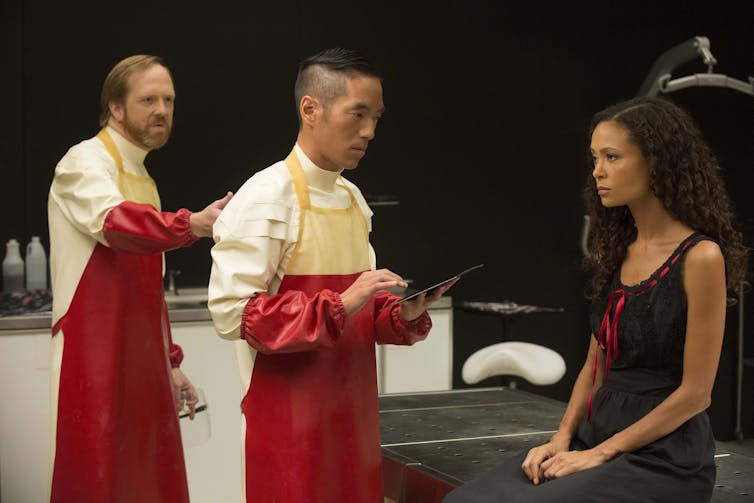
Image 20170224 22983 kskule.jpg?ixlib=rb 1.1Westworld: how far away is this future?
©2016 Home Box Office, Inc. All rights reserved

Amy C. Chambers, Newcastle University

This article accompanies episode 10 of The Anthill podcast on the future.


From Humans to Westworld, from Her to Ex Machina, and from Agents of S.H.I.E.L.D to Black Mirror – near future science fiction in recent years has given audiences some seriously unsettling and prophetic visions of the future. According to these alternative or imagined futures, we are facing a post-human reality where humans are either rebelled against or replaced by their own creations. These stories propose a future where our lives will be transformed by science and technology, redefining what it is to be human.

The near future science fiction sub-genre imagines a future only a short time away from the period in which it is produced. Continue reading “Why science fiction set in the near future is so terrifying”

City Now City Future at the Museum of London

MOL1

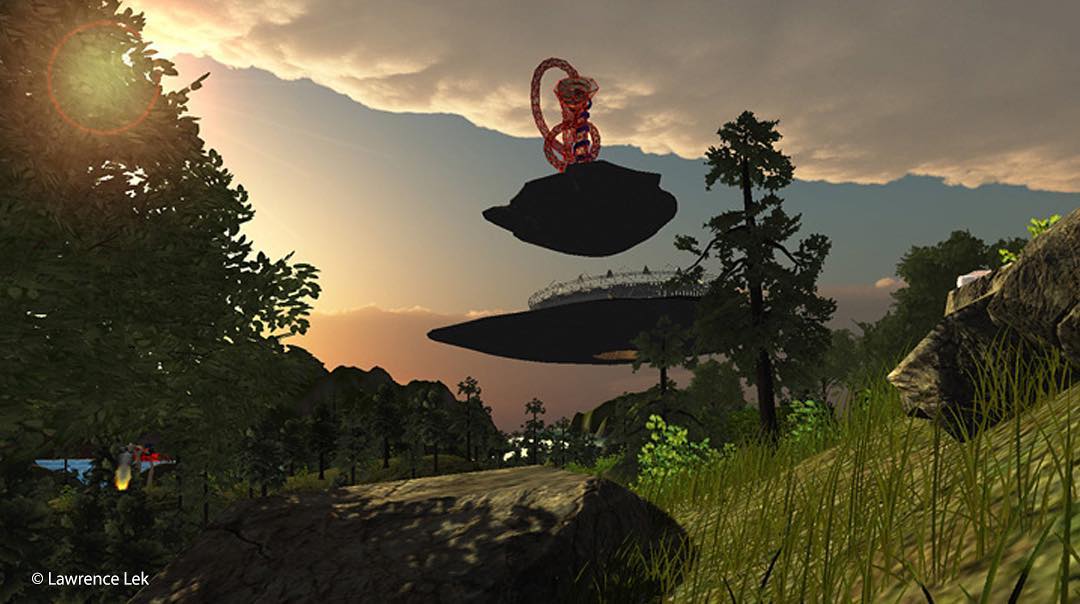
#BonusLevels #LawrenceLek #utopia#CityNowCityFuture
Visual artist, Lawrence Lek has created Bonus Levels, a series of playable video games depicting a dreamy, utopian, but recognisable London.

Bonus Levels is on at the Museum of London until January 3rd, 2018. It is part of the museum’s City Now City Future – a year-long theme which is foregrounded by the ‘Imagined Futures’ curated by Dr Caroline Edwards located near the entrance.

Imagined_Futures_main_img_

According to the blurb:

Of all cities, London is one of the most widely represented in literature. During the 19th century, when it rose to prominence as the centre of the British Empire, London was considered the peak of civilisation. However, this achievement was matched by the violence of a colonial system that damaged the places and peoples from which the city drew its vast wealth, in India, Africa and the Caribbean.

London therefore made the ideal setting in which to imagine future visions – in books that destroy the metropolis through scenes of devastation, or rebuild it as a fairer society. From Mary Shelley’s disaster novel, The Last Man (1826), to H. G. Wells’s techno-utopian vision in The Sleeper Awakes (1899), London established its reputation as a city in which to enact different visions of the future in literature.

In the 20th century, such imagined futures became increasingly bleak, particularly in the post-World War II period, and by the 1970s writers were experimenting with surreal future London landscapes. More recently, London has become home to the leading characters in influential books for younger readers, such as J. K. Rowling’s Harry Potter series and Neil Gaiman’s Neverwhere (1996). In the 21st century, as we come to terms with the environmental impact of climate change, the city has once again found a new role as a literary setting.

This display was curated by Dr Caroline Edwards, Senior Lecturer in Modern & Contemporary Literature at Birkbeck, University of London, and designed by Martin McGrath Studio. Quotes reprinted by kind permission of the authors/publishers.

From our archive: An interview with Saul Williams by Richard Howard

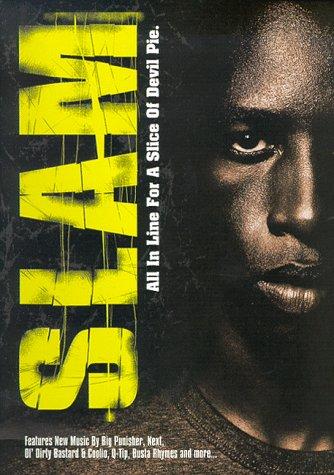
slamSaul Williams is a poet, hip-hop M.C., producer and actor who first came to prominence through his victory at the poetry Grand Slam at the Nuyorican Poets Café in 1996. This event kick-started an acting career for Williams with the lead role in the feature film Slam in 1998, and a music career in which Williams began to blend his poetry with his love of hip-hop. What makes Williams’ work interesting from a science fiction standpoint is the obvious affinity he has with the genre, evident in his lyrics and the soundscapes that he chooses to rhyme over. From the outset, Williams wrote and produced with a speculative bent. In the song ‘Ohm’ from 1998’s Lyricist Lounge compilation, Williams announced ‘I am no Earthling, I drink moonshine on Mars/And mistake meteors for stars ‘cause I can’t hold my liquor/But I can hold my breath and ascend like wind to the black hole/And play galaxaphones on the fire escapes of your soul’. The glimmering production on ‘Ohm’ is no less science fictional, especially as it accelerates at around the three-minute mark.

Continue reading “From our archive: An interview with Saul Williams by Richard Howard”

BSFA events: Anne Charnock interviewed by Glyn Morgan

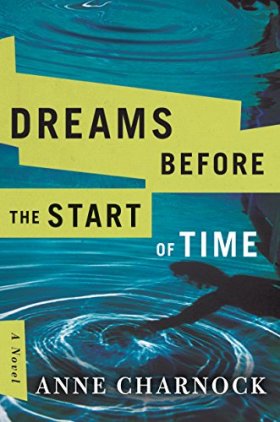
The BSFA holds regular events in London, usually on the last Wednesday of the month, at the Artillery Arms near Old Street. These events are free, and open to members and non-members alike. Keep an eye on the BSFA website for news of future events. In November 2017, former Vector editor Glyn Morgan interviewed acclaimed author Anne Charnock, whose first novel A Calculated Life was nominated for a Philip K Dick Award and whose second novel, Sleeping Embers of an Ordinary Mind was listed by The Guardian as one of the Science Fiction Books of the Year in 2016. She also regularly takes part in The Ada Lovelace Conversations, a collaborative project between The Arthur C Clarke Award for science fiction literature and Ada Lovelace Day, an international celebration of the achievements of women in science, technology, engineering and maths. Anne’s latest novel, Dreams Before the Start of Time, is out now.

 Andrew Wallace has checked his watch, confirmed he was there and reports as follows…

What will survive of us is love

dreamsThe themes of Anne’s latest novel Dreams Before the Start of Time evolved from ideas about reproductive technologies likely to be with us within the next forty years. The book explores the psychological, ethical, legal and social implications of these technologies by following generations of the same family into the future as they take advantage of these new opportunities and deal with the unexpected consequences. Anne believes that fiction offers the best means of analytically, emotionally and aesthetically engaging with the potential impacts of innovations and trends, from our ‘reproduction’ as digital selves to artificial intelligence, genetic engineering and the emergence of China as both a strategic world player and presence in our future lives.
Continue reading “BSFA events: Anne Charnock interviewed by Glyn Morgan”

My Friend, The Bot

By Jay Owens.

I first met @botaleptic on 10th March, 2015. We were introduced by our mutual Twitter friend, Hugo.

We soon got talking:

We soon got talking

@botaleptic is a Twitter bot created by Hugo Reinert, who tweets as @metaleptic. His DNA is simple: “he” is a ruby script, running on a free app server, based on mispy’s twitter_ebooks code. Like all Twitter bots — automated ‘robot’ accounts — @botaleptic is simply an algorithm.

In this essay, I want to talk about how @botaleptic is much more than an algorithm.

Continue reading “My Friend, The Bot”

Lone Wolf Bioterrorists and the Trajectory of Apocalyptic Narratives

By Polina Levontin, Jo Lindsay Walton, John Mumford, and Nasir Warfa. 

In this academic article, the authors explore a range of science fictional texts dealing with so-called ‘lone wolf’ bioterrorism, and ask what we might learn from them about dealing with the real bioterror threats of the future. The possibility of an engineered pandemic is one of the more terrifying new risks of the 21st Century. As technology lowers thresholds for developing bioweapons, even individuals with relatively ordinary knowledge and budgets could become responsible for extraordinary threats. Although several real-life bioterror incidents are known, no large-scale pandemic has yet occurred as a direct result of terrorism. Fiction, however, offers detailed scenarios of such events. Writers of these narratives find themselves at the intersection of modern science and deep literary tradition of pandemic narratives, originating with biblical accounts of plagues. This academic working paper examines portraits of ‘lone wolf’ bioterrorists in several contemporary fictional sources, focusing on how writers draw on counterterrorism discourse, particularly in their attempts to psychologically model the perpertrators. It flags up the dangers of a truncated speculative space, and concludes with a discussion of impacts these imaginaries might have, through influencing how emergent bioterror threats are perceived by scientists, policymakers, and the public.

CAS_4qyz (1)
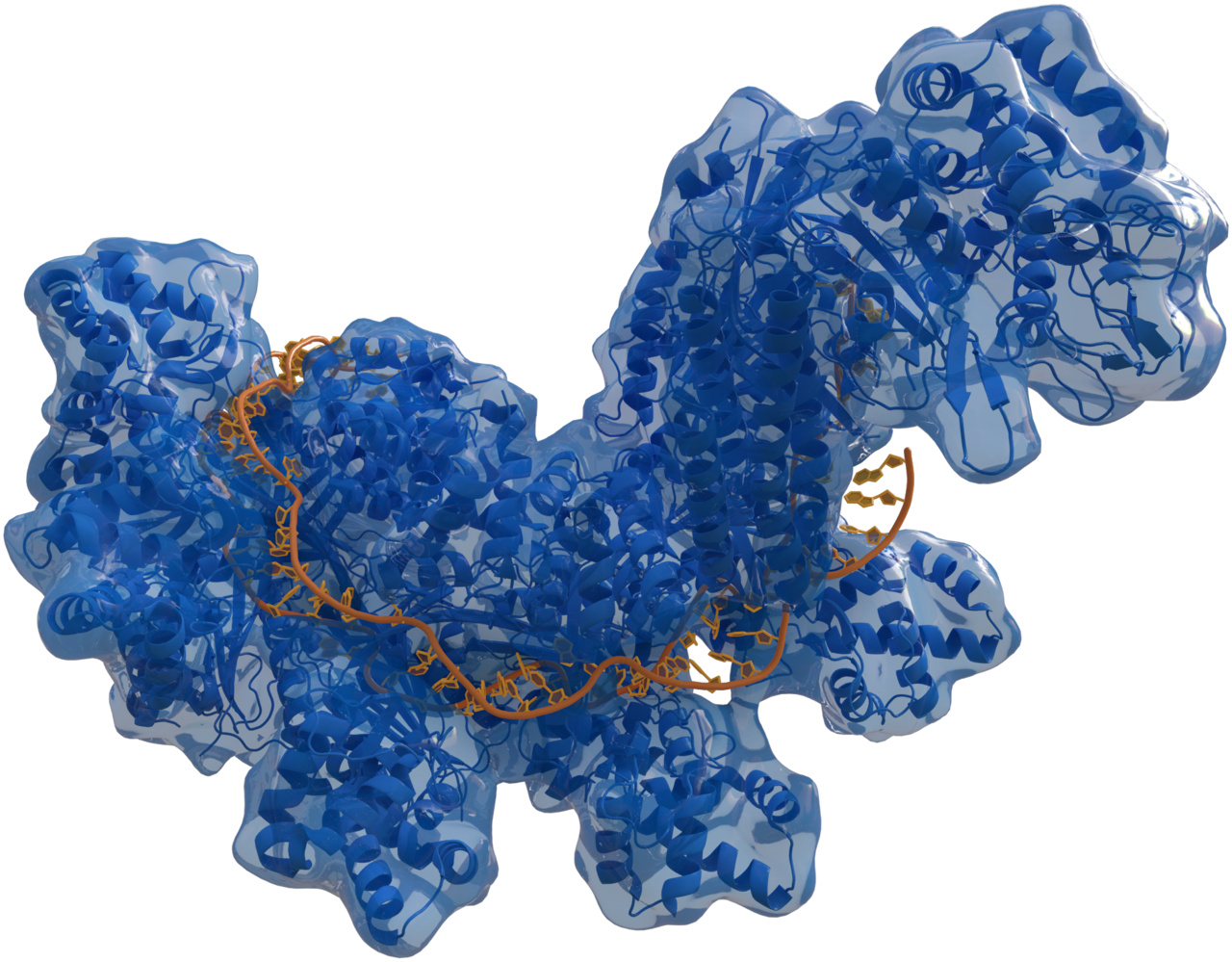
Type-I CRISPR RNA-guided surveillance complex (Cas, blue) bound to a ssDNA target (orange). By Thomas Splettstoesser

Dr. Polina Levontin, Centre for Environmental Policy, Imperial College London

Dr. Joseph Lindsay Walton, Institute for Advanced Studies in the Humanities, University of Edinburgh

Prof. John Mumford,  Centre for Environmental Policy, Imperial College London

Dr. Nasir Warfa, Centre for Trauma, Asylum and Refugees & Department for Psychosocial and Psychoanalytic Studies, University of Essex

Continue reading “Lone Wolf Bioterrorists and the Trajectory of Apocalyptic Narratives”