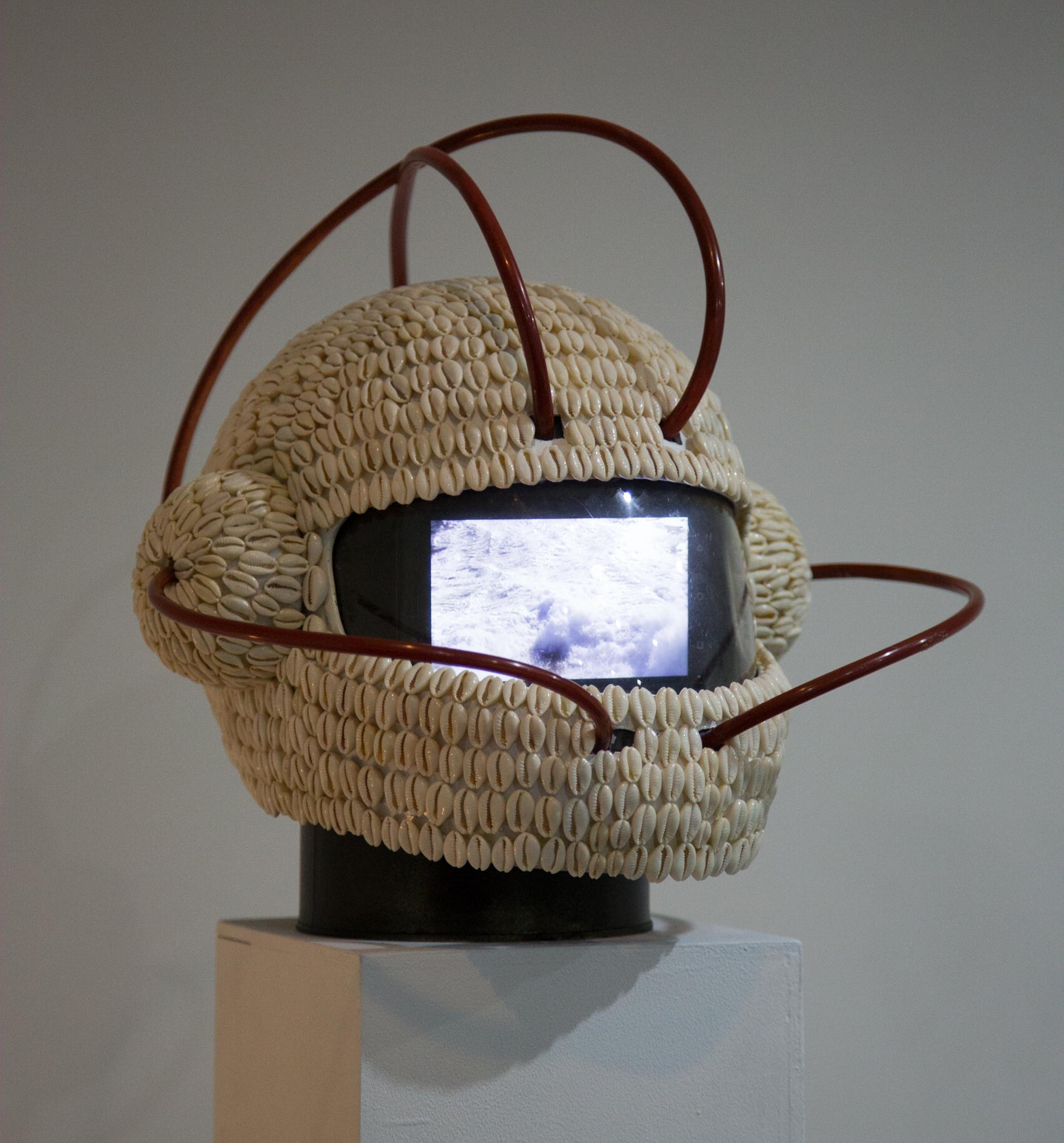
Currently, the horror renaissance sweeps through mainstream cinema and television at a pace that’s hard to keep up with. Horror narratives have always been out there, lurking in popular culture, but until recently they felt like a niche interest, ghettoised with fantasy monsters played by actors in thick make-up and rubber suits, tucked alongside the bug-eyed aliens of science fiction.
However, like science fiction, by the mid-2010s, horror is everywhere, reaching huge cinema audiences and, through Netflix and terrestrial television, coming right into our homes. The horror genre, appropriately enough, has now infected a wider host body, and it is mutating, challenging viewer expectations as to what horror is and what it is capable of. I would suggest that horror as a genre has always carried the power to challenge our thinking, to make us consider what defines a monster, and to pull back the veneer of everyday life to expose what’s going on underneath. However, you once had to be a horror aficionado to appreciate that the genre was more than just jump scares and screams. What’s new is that, by busting out of its culturally marginal position, horror is now expanding its narrative, satirical, and critical powers in front of the very mainstream society that it challenges.
‘On Afrofuturism’ was an important topic at the virtual 2020 WorldCon in New Zealand. The conversation paid attention to the term generally applied to embrace literary works that use the frame of science fiction, fantasy or horror to re-imagine the past and present experiences of the African diaspora, and to explore what black futures could look like.
On the panel were Suyi Davies Okungbowa—a renowned Nigerian author of fantasy, science fiction and horror inspired by his West-African origins, including David Mogo, God Hunter; Brandon O’Brien—a writer, performance poet and game designer from Trinidad and Tobago, also the editor of Fiyah Magazine; Ekpeki Oghenechovwe—a Nigerian writer with honourable mention (twice) by the L. Ron Hubbard Writers of the Future Contest, and an award-winning best story in the Nommo Awards for speculative fiction by Africans; myself; and skilfully moderated by Maquel A. Jacob—a multi-author and owner of MAJart Works—who propagated stimulating questions, many from the audience, across the panel.
The introduction to the session stated:
According to Yes! magazine, the concept of Afrofuturism may only go back to 1966, when the Black Panther first appeared in a Marvel comic and Lt. Uhura appeared first appeared on Star Trek. The recent MCU movie, Black Panther, shone a bright light onto this subgenre. Our panel explores its origins, what it encompasses and what works they recommend for getting more familiar worth the subgenre.
In this issue you’ll find several insightful articles: “The Dystopian Narrative: an Analysis of Texts that Portray Nightmarish Futures” by Giovanna Chinellato; “The Needle and the Wedge: Digital Games as a Medium for Science Fiction” by Monica Evans; and “Amazofuturism and Indigenous Futurism in Brazilian Science Fiction” by Gama and Garcia.
There’s also an exciting array of interviews, including “This Is How You Produce The Time War”: Powder Scofield interviews Amal El-Mohtar and Max Gladstone; “Another Kind of Party”: Vector interviews Catherynne M. Valente; “The Science and the Politics”: Vector interviews Nancy Kress; “Actions and Reactions and Ripple Effects”: Liz Lutgendorff interviews Valerie Valdes; “Living among the Leviathans”: Robert S. Malan interviews Stewart Hotston; and “More Politics, More Magic, and More Queer”: Alison Baker interviews Juliet Kemp.
Paul Kincaid‘s regular column, “Kincaid in Short,” is devoted in Vector 291 to a short story by Brian Aldiss, “The Girl and the Robot with Flowers”. There are three highlighted book reviews from The BSFA Review by Andy Sawyer, Maureen Kincaid Speller and Kate Onyett, as well as a special review-essay by Nick Hubble about Sideways in Time: Critical Essays on Alternate History Fiction, edited by Glyn Morgan and C. Palmer-Patel. Finally, this issue features a review-essay by Dev Agarwal “Us: A film about ‘Them’?”, a conference report by Jasmine Sharma on “Productive Futures: The Political Economy of Science Fiction,” and several artworks by the artist David Lunt.
Loosely based on H.G. Wells’s classic novel, Creation Theatre’s The Time Machine: A Virtual Reality is a piece of theatre that has 2020 written all over it. A zany and thought-provoking eleganzoom extravaganzoom, the show is simultaneously set in your own living room or kitchen, and in a vast, strange multiverse where “the present is endlessly shifting and the future is strange and uncertain,” and where time travellers “tinker with timelines causing people’s names, faces and indeed the colour of their socks to change without warning.”
We were lucky enough to be joined by director Natasha Rickman for a deep dive into the process of creation and re-creation. Beyond the original site-specific production of The Time Machine, and this new version reimagined for the digital stage, Natasha’s directing credits also include Twelfth Night (Rose Bankside), Rhino (Kings Head), Hilda and Virginia (Jermyn Street), Honour (The Royal Court), and as associate director, A Little Night Music (Storyhouse), Shirley Valentine (Bury St Edmunds), Comedy of Errors (RSC), and Romeo and Juliet (The Globe). Natasha is also an artistic associate at Jermyn Street Theatre and co-founder of Women@RADA.
Hi Natasha, thanks so much for speaking with Vector. Are you hearing me OK? My internet’s been a bit funny recently.
Yeah, hopefully we’ll be lucky. My internet’s been actually great the whole time I’ve been making the show, and then just recently it’s like it knows the show is open and it’s just doing its own thing now …
So I guess that’s my first question! When you’re creating a remote theatrical experience like The Time Machine … how do you deal with people’s internets being a bit funny?
It’s definitely one of the challenges of the show. All of the performers are in their living rooms or bedrooms, performing in a variety of locations around the country with varying levels of wi-fi reliability. And yes, performers do sometimes get thrown out of the call. They’ll break up, or their microphone will go. We’ve literally had them be chucked out of a call for a couple of minutes before.
So we’ve had to create a variety of back-up plans. For example, we’ve got some pre-recorded video which only gets shown if people are having sound issues. We’ve also got a thing called parallel reality. The part of the Time Traveller is played by multiple people. That means if one actor needs to jump and take over, they can shout “Parallel reality!” and do that. We actually had a version of that in the original show as well.
Perhaps the material lends itself somewhat to the uncertainties of the medium? The Time Machine is already about a kind of glitching, melting reality.
Yes, definitely. Jonathan has imagined this world where suddenly you can change where you are, or you can change who you are. Another thing we use is what we call elastic content. That’s content that only happens if it’s needed in the show. We have a piece of elastic content in case someone gets thrown out of a call. It’s a scene that could happen at any time. Basically, there’s a whole load of backup material that only makes it into the show if something goes wrong.
UPDATE: Nick now has received enough offers for the first round of research, and would like to thank all those who have volunteered. There may be a further call for volunteers in the future.
Nick Goddard is a doctoral researcher at the University of Buckingham, exploring SF fandom. If you’d like to help out, get in touch.
Exploration of Science Fiction Fandom
Are you a science fiction fan? Would you like to talk about your experience of science fiction fandom? My name is Nick and I am a PhD student at the University of Buckingham. I am looking to interview participants about their experience of science fiction fandom. I’m particularly interested in your experience of fan activities, the benefits and disadvantages of fandom and your experience of other fans and fan groups.
Interviews will take place over Skype and are expected to take 45-60 minutes. For more information, and to register your interest, please email the researcher, Nick Goddard, 1807057@buckingham.ac.uk.
In order to participate, you must:
Have self-identified as a science fiction fan for at least two years
Immediately the protesters’ drones start to drop lower, arrows scrolling across their screens to shift the march’s route, and new cues rattling from speakers to realign the chanting.
WHY ARE YOU IN RIOT GEAR?
WE DON’T SEE NO RIOT HERE!
WHY ARE YOU IN RIOT GEAR?
WE DON’T SEE NO RIOT HERE!
Rush spots a couple of cops behind the main line not wearing headgear, senior officers or strategic management agents, and blinks to grab images of them, storing them away to run through image-search algorithms later. Until you can dismantle them, he tells himself, always use the oppressors’ tools against them.
Vector would like to express our solidarity with the anti-racism protests currently occurring in the USA, UK, and around the world. The BSFA Chair will be doing the same, in the newsletter this week, on behalf of the BSFA.
For those of us in the UK who would like to find out more ways of offering practical support, but don’t know where to start, a few useful resources relating to anti-racism, policing, courts, and prisons are:
The BSFA have partnered with FANAC.org to make sixty years’ worth of back issues available free online. This collection includes for the first time scans of all of the first seven issues (editors inclue E.C. Tubb, Terry Jeeves, Roberta Gray, and Michael Moorcock).
Among the earlier issues, there are still one or two gaps, so if in the course of your spring cleaning you find a #12, #33, #46, #47, or #49 perfectly preserved in amber, or a #50, #51, #53, #54, #62, #63 or #184 released by glacial melt, get in touch.
The archive is an absolutely fascinating place to swim around in. In Vector #79 (1977) I stumbled on two striking comic strips by Judy Watson. There are no words. In one comic, titled ‘The Last Fish,’ a fabulous high femme fish is exploring a desolate, junk-crammed ocean. Grinning fishers, evidently in competition with one another, track her on sonar, surround her, and all together cast their vast nets, sized for catches in the thousands or millions, snagging her in a monstrous tangled web. The final panel is remniscent of da Vinci’s Last Supper, except with a vast host of indistinct gatecrashers (5,000 at least) standing in observance. All attention is focused on the little fish on her platter. A single figure at the centre is poised with knife and fork. The seated ‘diners’ — crude national stereotypes — all point and reach, their faces fixed in eerie rictuses remniscent of fish-bones. One figure, skeletal from hunger, does not reach toward the last fish, but instead cowers from her.
In another comic, ‘If,’ blood flows freely from the protagonist’s breasts. She tapes them up, and blood pours from her navel. She tapes this up too, and visits a Dr [Somebody] — or perhaps Dracula, the edge of the sign is obscured — a balding fanged man, who drinks the blood from her breasts. She weeps, her tears turn to blood, she sits weeping under a tree. Then there is an ambiguous ecological epiphany: she smiles, she finds herself covered with — perhaps she generates? — flocks of dragonflies and butterflies.
Peter Swirski, Stanisław Lem: Philosopher of the Future. Liverpool University Press, 2015 (Liverpool Science Fiction Texts and Studies, 51). ISBN 978-1-789620-54-2. Paperback, $35.41 / £19.95.
Memory tells me that I started reading science fiction in the late 1940s in the form of Heinlein stories that had appeared in Boys Life, which I subscribed to as a boy scout. When I started college at Berkeley in 1952, I discovered the Elves, Gnomes, and Little Men’s Science Fiction, Chowder and Marching Society. By the time I’d spent four years in the Air Force and finished my graduate studies at Harvard, I had collected a large SF library, including an almost complete run of Astounding. The point of this narrative is that my deepest knowledge of SF was the so-called Golden Age. Though I’ve continued reading SF and fantasy, and have published over fifty reviews of SF and fantasy books in the last twenty years, the renowned Polish writer Stanisław Lem has remained on the borderline of my reading.
When Vector (the journal of the British Science Fiction Association) solicited reviewers for this book, I offered because I wanted to learn about Lem. For readers who share my previous ignorance, Lem was born in 1921 in Lwów, Poland (now Lviv in the Ukraine), and died in Krakaw in 2008. According to Swirski’s bibliography, Lem’s first published science fiction story appeared in 1946 (Man from Mars—translated title); his first collection of SF stories appeared in 1957 (translated in 1977 as The Star Dairies). Fiasco, his final SF publication, appeared in 1987, translated with the same title in 1988.
Peter Swirski himself was born in Canada in 1966 but has spent most of his professional life elsewhere; presently a distinguished visiting professor in China, he has also taught in Finland and Hong Kong. His preoccupation with Stanisław Lem began with a 1992 article in Science Fiction Studies; the monograph reviewed here is the latest of Swirski’s six book publications on Lem. His other publications are on aspects of American literature and culture.Continue reading “A review of Stanisław Lem: Philosopher of the Future”→
In this article, Eugen Bacon reflects on her journey of discovery into AfroSF. Meanwhile, Ivor W. Hartmann’s groundbreaking AfroSF anthologies are currently included in the African Speculative Fiction bundle from Story Bundle.
By Eugen Bacon
It was a love and hate relationship with M. The brusque and direct nature of this editorial colleague of mine every so often came across as pomposity, and I knee-jerked. So much that I nearly fell in wonder when M approached me asking for a favour.
“How about a pitch?” he said. “I’ve seen this AfroSF thing on Amazon a couple of times, it would be great to write an article.”
M was offering an olive branch. He wanted me to write for his nonfiction section of a popular magazine. And I had just the title for this piece: “What is AfroSF?” To put it in context, this was a few years ago.
It was a journey of discovery that led me to a community. The African Australian in me was curious to unearth AfroSF, an inquisitive quest to decipher this literary movement, this subgenre of science fiction—what was it exactly? Yes, I anticipated that it had some derivation from hard or soft science fiction, cyberpunk, mutant fiction, dystopian or utopian fiction, pulp, space opera, and the like, and that it had something to do with Africa. What else would I discover?
An online search steered me to a 406-paged anthology published in December 2012 by StoryTime, a micro African press dedicated to publishing short fiction by emerging and established African writers. The StoryTime magazine was formed in 2007 in response to a deficit of African literary magazines.
Some readers described it as a ‘ground-breaking anthology’ of diversity and hope, an ‘African Genesis’ that was intense and varied in its fresh viewpoints. Editor and publisher Ivor W. Hartmann spoke of his dream for an anthology of science fiction by African writers, and his realisation of this vision in a call for submissions that birthed original stories published as AfroSF. Illuminating his fascination with the collection, Hartmann said, ‘SciFi is the only genre that enables African writers to envision a future from our African perspective.’
Bravo, I thought of this Zimbabwean writer, editor, publisher, visual artist and author of Mr Goop (2010)—an award-winning post-apocalyptic short story of a boy who struggles with coming-of-age concerns like bullies and scholarly performance, in a science fiction society called the United States of Africa, guarded by robots and chaperoned by humanoid genoforms.